
September 17, 2026 · 4 min read
9 Months of Claude Code, 200 Million Tokens, Zero AI Agents Built
Nine months of Claude Code, 1,800+ sessions, 200M+ tokens, and zero AI agents built by Anthropic's definition. What most finance 'agents' really are, the one agent I do run, and the harness I built around it.
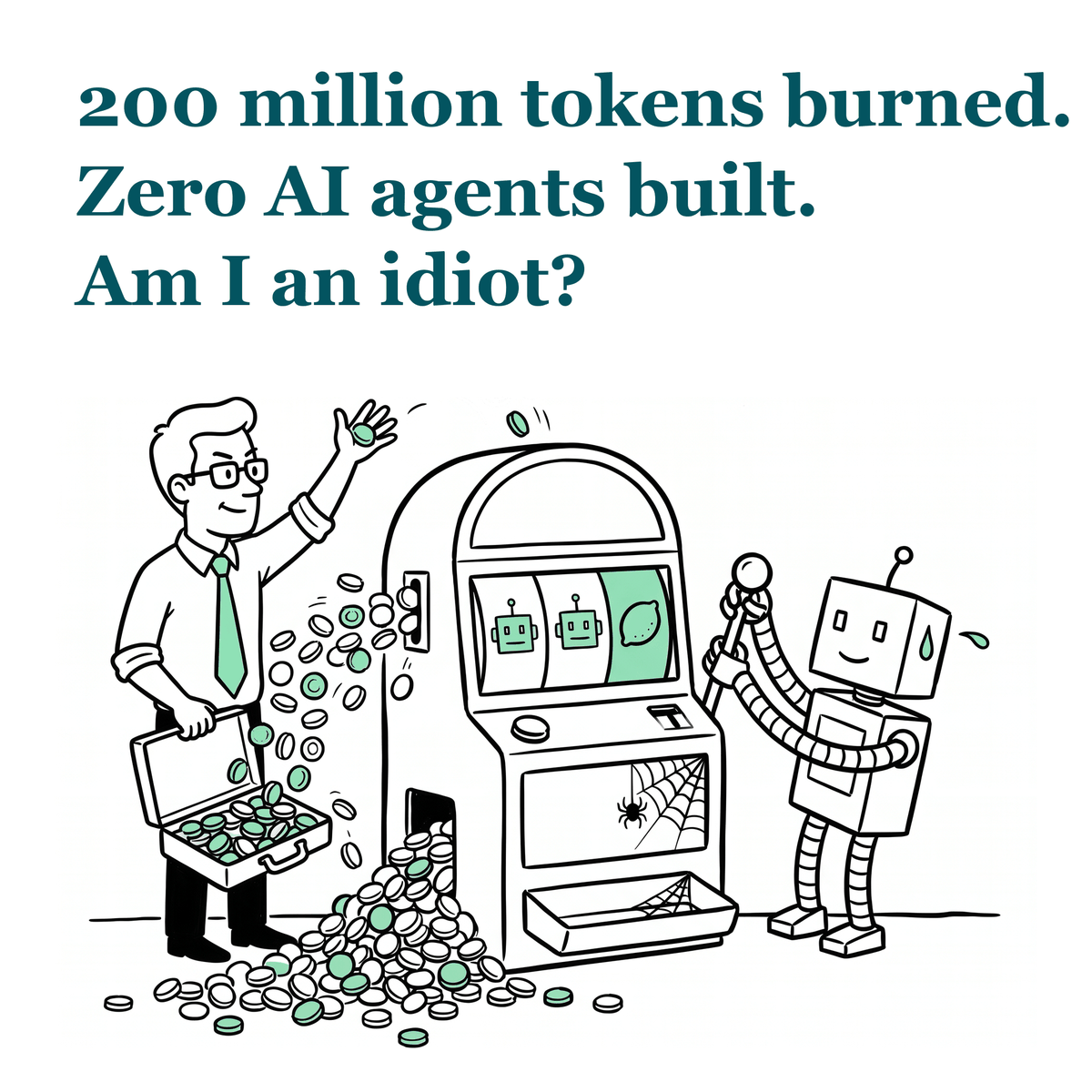
9 months of Claude Code. 1,800+ sessions. 200M+ tokens. Agents I built: zero.
Agents built by the finance teams I work with: also zero.
What everyone else seems to be building
Meanwhile on social media: "We built 13 agents and run finance with zero employees."
My insecure self: everyone else is doing magic stuff and I don't. And people are even paying me to be their AI and finance sparring partner.
Call me a slow learner, but it really took me many months to understand what an agent is, and why so many people claim they built one. The confusion has a reason. Every vendor has an incentive to call whatever it sells an agent, and the word has no protected definition. So I went to the people who build the models.
What is an AI agent, by Anthropic's definition?
Anthropic drew the line in Building effective agents in December 2024. In plain words:
An agent gets a goal and works out the steps itself. It picks which tools to use, checks the results, and decides when it's done.
A workflow follows steps a human wrote down in advance.
That is the whole test. Who decides the next step: the model, or the person who drew the flowchart? If the flowchart came first and the AI fills in one box of it, you have a workflow with a language model inside. Often useful. Rarely an agent.
Three finance "agents" that are workflows
Apply the test to the agents I hear about most from finance teams:
- The invoice "agent." AI reads the PDF, a fixed rule routes it to approval. A workflow.
- The bank reconciliation "agent." Matches by amount and date, flags the rest. A workflow.
- The month-end close "agent." A checklist, with AI going through the checklist. A workflow.
An agent would get "close September" and decide itself which reconciliations to run, which receipts to chase, which closing entries to post, when the numbers tie and when the close is done. I know nobody who runs that in production, and I would be nervous if they did.
Most of the time, when someone says "I built an agent," it is one of two things:
- A skill. A written procedure the model follows for one recurring job. Valuable, and I use them all day. Still a workflow.
- A chatbot. A system prompt plus a knowledge base. Microsoft Copilot and other providers call this an agent, which explains a lot of the confusion.
So where did my 200 million tokens go?
I'm running one agent someone else built: Claude Code.
It took me a while to realize that Claude Code is an agent in itself. It gets a task, plans the steps, uses my files and tools, and stops when done. On bigger jobs it hands parts to helper agents on its own: one does the research, another picks holes in the result. Fable 5.1 in particular spawns helper agents frequently, without being asked.
Run it through the test. Nobody drew that flowchart. I say "turn these seven years of DATEV exports into a clean database and give me a trial balance by year," and it decides whether to write a script, which files to read first, how to check its own output, and when the result is good enough to show me. That is the loop Anthropic describes.
I didn't build any of that. Anthropic did.
What I built is the harness around it
Everything that turns a generic agent into mine:
- 19 rules for how I work. No email leaves without my approval, no em-dashes in anything public, which booking link goes to which recipient.
- 52 skills for recurring finance jobs. The monthly invoice run, the receipts email to my tax advisor, the follow-up after a client session.
- 404 saved learnings, so it remembers between sessions what went wrong last time.
- 148 context files on my clients, projects and tools.
- 49 small tools (Python scripts) and 11 background automations.
Keeping that harness current is about 20% of my time and token usage. That is where the tokens went: into teaching one agent how my practice works, rather than into building a second one.
The counts change every week, and the harness is never done. That is also the point. The agent I could never have built myself. The harness nobody else can build for me, because it encodes how I work.
Your turn
If you've built a true agent for finance work, one that works out its own steps: what does it do, and what does it decide on its own?
This started as a LinkedIn post; the comments are there.
Frequently asked questions
What is an AI agent?
By Anthropic's definition, an agent gets a goal and works out the steps itself. It picks which tools to use, checks the results, and decides when it is done. The model directs its own process instead of following a script a human wrote.
Is a workflow an agent?
No. A workflow follows steps a human wrote down in advance, even when a language model fills in one of those steps. The invoice, bank reconciliation and month-end close 'agents' most finance teams describe are workflows by this test.
What is a harness?
Everything around the agent that makes it work for one person or one team: rules for how you work, skills for recurring jobs, saved learnings, context files on clients and projects, small tools and background automations. The agent is generic. The harness is what makes it yours.