
September 22, 2026 · 3 min read
Has AI Changed Who I Hire for Finance? No. Nothing Has.
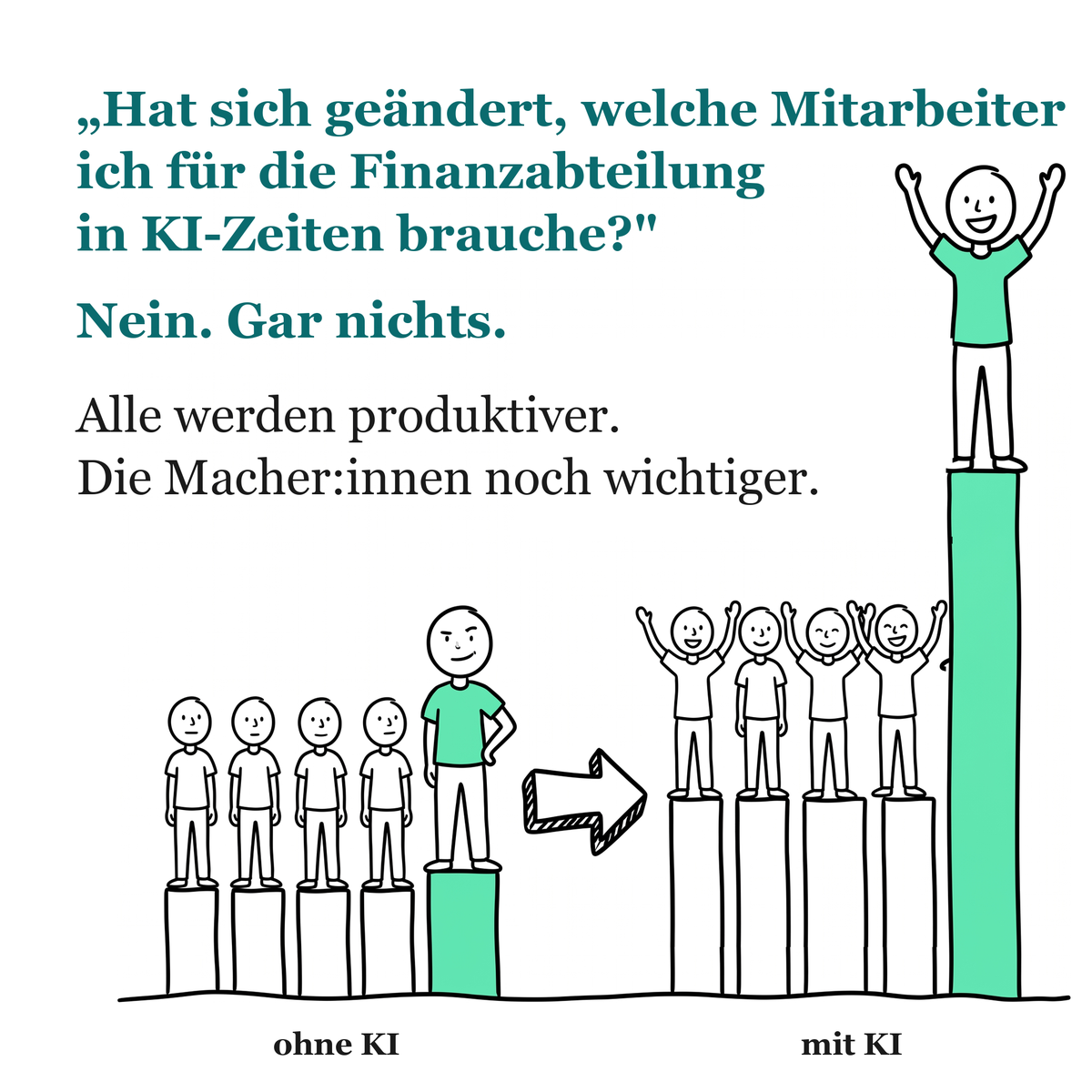
20 years, about 100 people on my teams, about 50 hired myself: AI has changed nothing about who I look for in finance. Passion for the domain, curiosity, technical understanding and doers. What changed is the lever, and it makes the doers matter even more.
"Has it changed which people I need on a finance team in the age of AI?"
Sevinj Aliyeva, VP Finance at Kenjo, asked me that a few months ago in a webinar with Moss. Live, in front of about 200 finance people, clearly expecting a list of new skills.
My answer: No. Nothing has.
20 years, about 100 people, one profile
Over 20 years I have had about 100 people on my teams and hired about 50 of them myself. The profile I looked for has been the same since day one:
- Passion for the domain. Accountants who love accounting. Controllers who love analysis. Domain knowledge follows from that passion almost by itself.
- Curiosity beyond their own silo. People who want to know how sales builds its numbers, why the bank settles the way it does and what the ERP actually does in the background. Self-learners.
- Technical understanding. Not computer science, but the willingness to open a tool and understand what it does instead of waiting for the next ticket.
- Above all: doers. People who see an inefficiency, get annoyed by it and fix it. Doing instead of talking.
Those four points were in my job ads in 2016 and they are still there today. No prompting certificate, no tool name, not a line about AI.
Doing instead of talking
The doers were always the most valuable people on the team. They delivered efficiency and quality long before anyone talked about AI.
I know the opposite type just as well: people who spot the inefficiency, analyse it cleanly, build a deck about it and then wait for a decision. The deck is often good. The process keeps running exactly as before.
I have had smart people in both groups. The difference was never intelligence. The difference was whether someone turns the annoyance over a bad process into a fix or into a presentation.
Only the lever is new
A doer used to have a good idea, build part of it alone and then queue for the rest. At IT for database access, at data engineering for the pipeline, at the BI team for the dashboard. Some ideas never left the queue.
Today doers can build many of those automations with AI themselves. Finance is information processing in the end: text, numbers, all of it digital. That is exactly what AI is good at.
An example from my own practice: seven years of DATEV exports into a clean SQL database, with a trial balance per year. That used to be a project for a data engineer and several weeks of waiting. With Claude Code it took one session, and I cannot write SQL. Not because I got smarter. Because the lever changed.
The output gap widens
AI multiplies the output of exactly those doers. The lead they always had is now getting big. Everyone on the team becomes more productive. The people who already got things done become many times more productive, because their ideas no longer die in a queue.
For hiring, that means the requirements list from 2016 still holds. The lever behind it is a different one now. Anyone screening for tool skills today is screening at the wrong end. A curious person learns a tool in weeks. Nobody learns curiosity and the drive to execute from a course.
One more thing I added in the webinar: the profile alone is not enough. These people need the technical freedom to actually use the tools. A team that hires the right people and then bans Claude Code, Codex or comparable tools has hired the doers and taken away their lever.
Your turn
What about you: has AI changed your finance job ads? Is there anything in them now that was not there in 2016? And if so, does it describe a trait or a tool?
Frequently asked questions
What do I look for in finance hires?
The same four things for 20 years: passion for the domain, curiosity beyond their own silo, technical understanding, and the habit of fixing an inefficiency instead of describing it in a deck. AI has not changed that list.
Does AI replace accountants and controllers?
In my experience AI does not replace the people, it multiplies the output of the ones who already get things done. The doers on a team used to build part of an idea themselves and queue at IT, data engineering or BI for the rest. Today they build many of those automations on their own. The gap between doers and everyone else widens as a result.
What is a finance engineer?
Someone who combines deep finance knowledge with real technical sense in one person. That profile gains the most from AI, because it sees the problem and can build the fix. It also needs the technical freedom to actually use the tools.